How Repositioning Splints Realign the Jaw and Relieve TMJ Pain
Learn how repositioning splints treat TMJ disorder by realigning the jaw. A Gilbert TMJ dentist explains splint types, how they work, and what to expect.
Published on
May 8, 2026

Learn how repositioning splints treat TMJ disorder by realigning the jaw. A Gilbert TMJ dentist explains splint types, how they work, and what to expect.
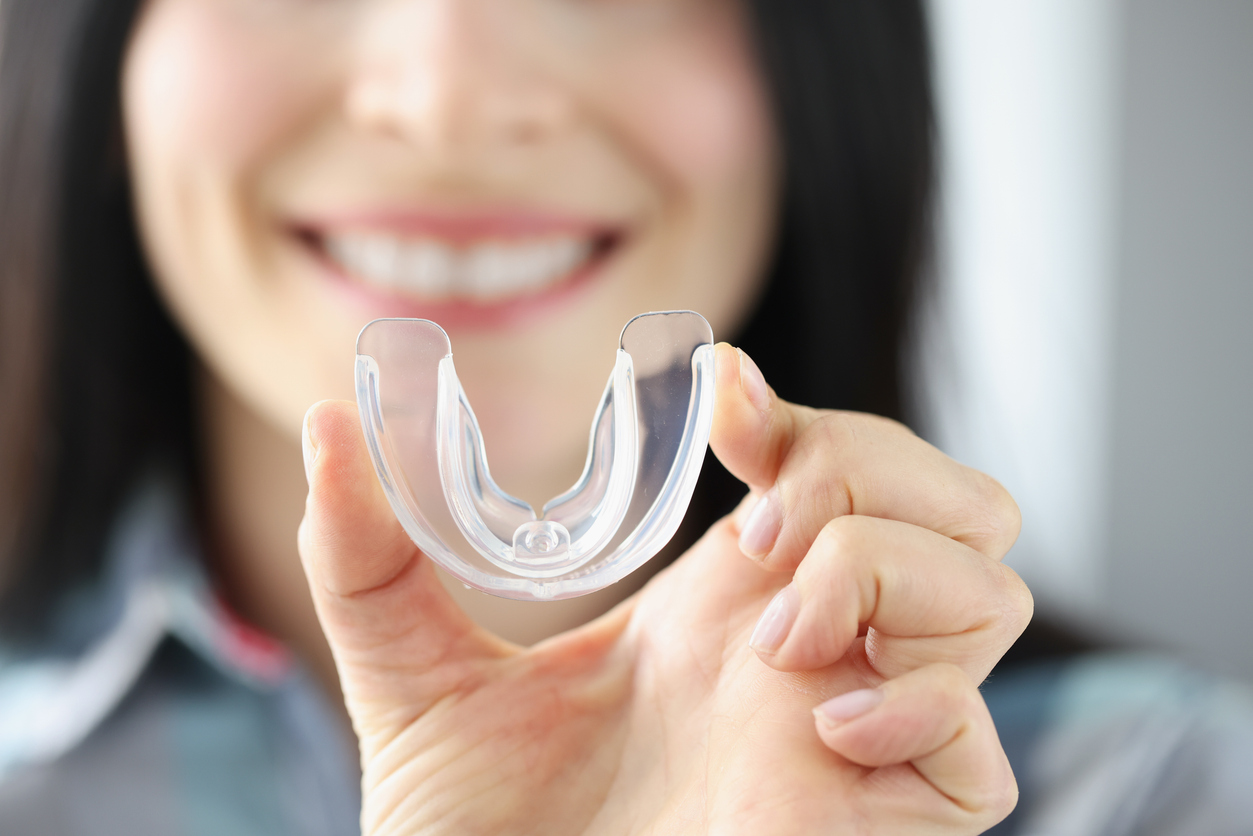
Both bruxism and temporomandibular joint dysfunction, sometimes referred to as TMD or TMJ, are painful conditions frequently treated using occlusal splint therapy. An occlusal appliance, commonly known as a splint, is a device worn in the mouth that is designed to cover the bite surface.
Using a repositioning splint for TMJ can be an effective method for realigning the jaw and is one of the most common treatments for TMJ disorder. Once the jaw joint is properly positioned, many TMJ symptoms typically subside.
Learn about TMJ diagnosis and treatment at our Gilbert dental office → East Valley TMJ
Temporomandibular joints, commonly referred to as TMJs, are the joints that connect your jaw to your skull. You have two of these joints, one in front of each ear on either side of your face. They extend from your temple down to your mandible, or lower jaw. These joints are essential for normal jaw function, including activities such as chewing and speaking.
A comprehensive treatment plan for TMJ disorder should begin with splint therapy, as it forms the foundation of treatment and is among the most essential therapeutic tools available. Splints can serve a variety of purposes, including the treatment of temporomandibular disorders, stabilization of the bite, and the prevention of damage and excessive wear on the teeth.
To treat your TMJ disorder, Dr. Garza may recommend that you wear a splint. A splint is a removable dental appliance that covers many or all of the teeth in the upper or lower jaw, depending on the patient’s needs. Splints are custom-made at a dental laboratory from an impression of the patient’s teeth and a durable acrylic resin.
The purpose of splint therapy is to stabilize jaw relationships, establish appropriate occlusal patterns, and reduce dysfunctional muscle activity, parafunctional oral habits, and joint loading. Common splint types include the following.
This splint fits on the upper jaw and allows only the six lower front teeth to make contact with it. As a result, it prevents clenching and grinding of the back teeth.
This splint covers all upper teeth and has a flat surface designed to reduce tooth grinding and relieve sore jaw muscles.
The NTI appliance is designed to prevent teeth clenching and grinding by fitting over the top front teeth only.
This splint is used to move the lower jaw forward or backward in order to recapture a displaced or clicking disc, or to establish a more favorable jaw position. It is one of the most widely used splints in TMJ treatment.
A disposable interocclusal splint sits between the patient’s posterior teeth on both sides and uses fluid-filled pads to distribute pressure evenly.
These occlusal splints are available for purchase in stores and are constructed of plastic that softens when heated. While accessible, they are not custom-made and may not provide the same level of fit or therapeutic benefit as a professionally fabricated appliance.
Worn during contact sports to protect the teeth from impact-related injury, sport mouth guards serve a protective rather than therapeutic function and are distinct from TMJ splints.
If you are experiencing jaw pain, clicking, headaches, or other symptoms of TMJ disorder, Dr. John A. Garza DDS, LVIF, FIAPA, FICOI can evaluate your condition and determine whether splint therapy is the right approach for your case. At his Gilbert dental practice, Dr. Garza has extensive experience diagnosing and treating TMJ disorder using a physiologic, neuromuscular approach — including custom-fabricated splints designed to address the root cause of your symptoms, not just manage them.
No referral needed. Call (480) 539-7979 or book online anytime. Welcoming new patients across Gilbert, Chandler, Mesa, and the East Valley.
About the Author
Dr. John A. Garza DDS, LVIF, FIAPA, FICOI has been practicing dentistry in Gilbert, AZ since 1994. He is highly trained in neuromuscular and physiologic dentistry, with extensive experience diagnosing and treating TMJ disorder, orofacial pain, and jaw dysfunction. One of fewer than 500 dentists worldwide to hold the LVIF designation from the Las Vegas Institute for Advanced Dental Studies.

.png)
.png)
Whether you’re overdue for a cleaning, looking for relief from TMJ pain and migraines, or are ready to transform your smile, Dr. John A. Garza welcomes new patients to his Gilbert dental office.
Book your appointment online in seconds or call to speak with our friendly team.

Welcoming New Patients
Most Insurances Accepted
1,000’s of Happy Patients